Why Nylon Yarn Lots Cause Shade Bands — and How to Stop Them
Shade bands usually appear after dyeing, when it is too late to change the yarn. Learn why nylon 6 lots differ, what to check before ordering, and how a full-process mill reduces the risk.
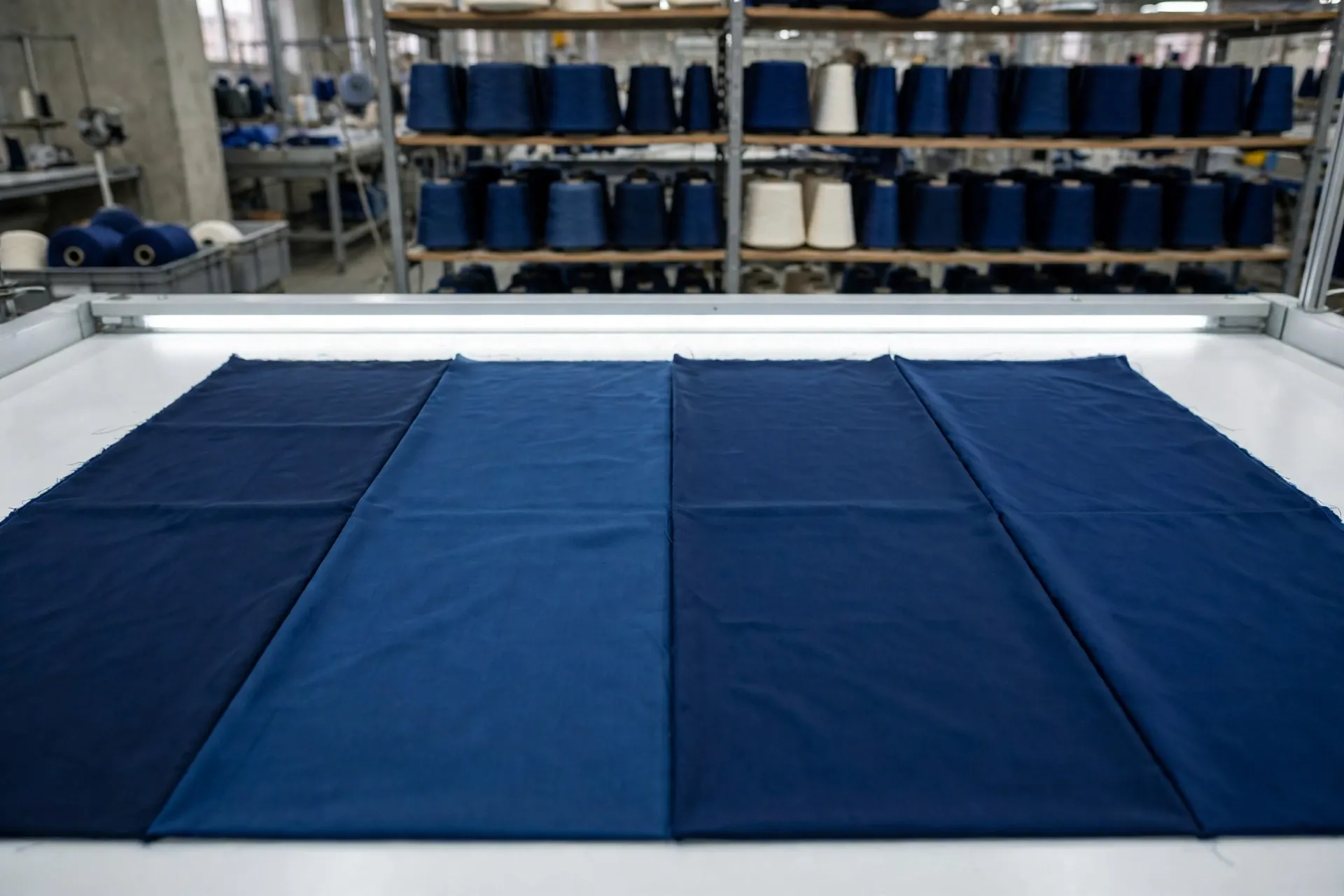
Shade bands rarely show on the loom. They show after dyeing — when it is too late to change the yarn, and the claim lands on the fabric maker.
If you knit or weave nylon 6, you have probably seen it: one panel of fabric takes the dye a fraction deeper than the next. The greige fabric looked identical. The difference was in the yarn lots.
Why lots differ
A shade band is usually a consistency problem, not a dyeing problem. The common causes:
- Denier drift between lots — a slightly heavier or lighter yarn absorbs dye differently, even inside the same nominal count.
- Different production stages sourced from different suppliers — POY bought from one mill and textured by another adds a second layer of variation on top of the first.
- Mixed lots inside one fabric order — two lots that each pass inspection on their own can still dye differently side by side.
What to check before you order
- Ask whether the full order can be supplied from one lot, and what happens if it cannot — mixed-lot orders should be flagged before production, not discovered after dyeing.
- Check the denier range, not just the headline count. For nylon 6, typical ranges are POY 48D/12F–118D/48F, FDY 40D/12F–150D/48F and DTY 40D/12F–280D/192F. A supplier who states a clear range and filament count is easier to hold to a repeat order.
- Repeat-order consistency matters more than a first-order sample. Ask how the mill keeps a repeat order matched to the lot you approved.
- Get the spec sheet before the trial order, and compare it against the yarn that actually arrives.
How a full-process mill reduces the risk
When spinning, drawing and texturing happen under one roof, there is one production chain to control instead of two or three companies handing yarn to each other. Fuzhou Lijin New Material runs full-process nylon 6 production — POY, FDY and DTY from one mill in Fuzhou — so a fabric order is not assembled from yarn of mixed origins. With 25 years in nylon 6 and OEKO-TEX, ISO and GRS certification, the mill supplies knitters, weavers and distributors in Southeast Asia, Europe and the Middle East.
FAQ
Can shade bands be fixed after dyeing? Usually not economically. Prevention — consistent lots and a single-lot supply for one fabric order — is far cheaper than re-dyeing or discounting finished fabric.
Is a slightly cheaper yarn worth the risk? If a fabric order is claimed or discounted because of shade bands, the loss normally exceeds the saving on the yarn. Consistency is the cost factor, not the invoice price alone.
What should I send for a quote? Your yarn type (POY, FDY or DTY), denier and filament count, the fabric you produce, and your estimated quantity per order. That is enough for a spec sheet and a quote.
Next step
Tell us the counts you run most, and we will send the matching spec sheet with a quote: lilian_fzljxcl@outlook.com
Related reading: Nylon 6 POY vs FDY vs DTY: how to choose · Products: Nylon 6 DTY · Nylon 6 FDY · Nylon 6 POY